

How ABA Organizations Can Build a Strong BCBA Fieldwork Program


One of the best ways to build a strong BCBA pipeline is to develop behavior analysts in-house. That's especially valuable as organizations compete for qualified clinicians in an increasingly competitive field.
But strong supervision doesn't happen by accident. An organization can employ highly qualified BCBAs and still have an inconsistent supervision program if each supervisor is left to develop their own approach.
So the first question to ask is: Does your organization have a supervision program, or does it simply have supervisors?
A strong supervision program creates the infrastructure around supervision, so trainees have a consistent, intentional path for developing the skills they'll need as future behavior analysts.
Here are several ways ABA organizations can build that system.
1. Create a Dedicated Student Analyst Position
A common challenge many aspiring behavior analysts encounter is that they take an RBT position to gain experience and begin accruing fieldwork hours, but then find themselves stuck in that role with limited opportunities to develop unrestricted activities or advance toward BCBA-level responsibilities.
One of the first things organizations should consider is developing a dedicated Student Analyst or Fieldwork Trainee position specifically for staff pursuing BCBA certification. Rather than keeping trainees in an RBT position indefinitely, a structured fieldwork-specific position can provide a clearer pathway for developing the skills and experience they'll need as future behavior analysts.
Many organizations structure this position as a progression. Early in fieldwork, the trainee may spend more time on direct-care responsibilities while developing foundational clinical skills (i.e., restricted hours). As they demonstrate competency and gain experience, they gradually take on more responsibilities that align with BCBA-level practice and contribute to their unrestricted fieldwork hours.
Be sure your trainee position includes:
A clearly defined job description
Structured onboarding
An individualized development plan
Meaningful unrestricted activities
Progressive clinical responsibilities
A clear pathway toward a BCBA position
This gives trainees something they often lack: clarity in the progression of their fieldwork hours, what to expect at each stage, and how their current responsibilities connect to their future role as a BCBA. It also makes fieldwork an intentional part of the organization's professional development strategy rather than something trainees and supervisors have to piece together on their own.
2. Define What Good Supervision Looks Like
Before an organization can build a strong supervision program, it needs to define what effective supervision actually looks like.
Meeting the minimum supervision requirements is only one part of the equation. Organizations should establish their own standards for what trainees and supervisors should expect from the supervision experience.
These standards might address:
How frequently supervision occurs
What supervision meetings should include
Minimum percentage of supervision (e.g., supervised or concentrated)
How supervisors provide feedback
How competencies are evaluated
How progress is documented
How supervision goals are established
How performance concerns are addressed
How supervision quality is monitored
Creating a consistent framework while allowing supervisors to individualize supervision based on the learner, setting, clients, and professional goals is key.
3. Establish Clear Criteria for BCBA Fieldwork Supervisors
Not every BCBA should automatically be expected to provide fieldwork supervision. It's a significant undertaking, and organizations should be intentional about selecting BCBAs who have the skills, experience, and capacity to take on the responsibility.
Organizations may benefit from developing an internal supervisor competency checklist so that becoming a fieldwork supervisor isn't simply what's expected when someone's hired or promoted to a BCBA. It becomes a role that requires its own set of skills.
It's also important to consider capacity. A BCBA who's already managing a full caseload may not have the time necessary to provide thoughtful supervision to a trainee. Adding a new supervisee to an already overloaded schedule can turn supervision into another task to squeeze into an already full day.

4. Make Unrestricted Activities Part of the Job
One of the biggest weaknesses in many fieldwork experiences is that trainees are left to figure out their own unrestricted activities. If an organization is serious about developing future BCBAs, those opportunities should be built into the trainee's role.
Fieldwork trainees should gain experience doing everything a BCBA does, including:
Reviewing and analyzing client data
Participating in assessments
Assisting with treatment-plan development
Developing or modifying programs
Graphing and analyzing data
Participating in caregiver training
Assisting with staff training
Conducting treatment-integrity checks
One way to create ample opportunities for unrestricted tasks is to structure the trainee role as a mid-level supervisor between the RBT and BCBA. The trainee would still be working under the appropriate supervision and wouldn't function as an independent clinician. However, the position gives them regular exposure to the clinical, analytical, and decision-making activities they'll need to succeed as a BCBA.
5. Focus on Competency, Not Just Hours
Fieldwork hours are a requirement, but hours alone don't tell you whether someone is developing into a competent behavior analyst. A strong supervision program should continually evaluate what the trainee can do, where they have gaps in their experience and competencies, and what they need to learn next.
6. Give Supervisors the Tools They Need
Supervisors often struggle to balance planning supervision activities on top of full caseloads. Organizations should provide a centralized supervision toolkit that could include:
Supervision meeting agendas
Competency assessments
Observation forms
Feedback forms
Goal-setting templates
Fieldwork tracking resources
Ethical decision-making resources

A Ready-to-Use Supervision Curriculum
Organizations don't have to build these resources from scratch.
The BCBA® Fieldwork Supervision Curriculum gives supervisors a structured framework for planning supervision, developing trainee competencies, and keeping fieldwork focused on the skills trainees need.
Give your supervisors the tools they need to spend less time planning and more time developing the next generation of BCBAs.
7. Create Consistency Across Supervisors
If an organization has multiple fieldwork supervisors who share clients, they shouldn't operate completely independently. Without some degree of calibration, trainees may not know what to expect.
Organizations should hold periodic supervisor meetings to discuss fieldwork-related topics, align expectations, and address common challenges. Every supervisor doesn't need to operate in the exact same way. They should have flexibility to individualize supervision based on the needs of the trainee and clients. But it's incredibly beneficial to establish a shared standard of quality supervision, so everyone is on the same page.
8. Protect Time for Supervision
One threat to a strong supervision program is treating supervision as something BCBAs should simply fit into their existing workload. If a supervisor is already managing a full caseload, supervision is likely to be rushed or inconsistent, essentially an afterthought.
Organizations should account for fieldwork supervision when designing caseloads and productivity expectations. If an organization expects high-quality supervision, it needs to provide supervisors with the time and capacity to provide it.
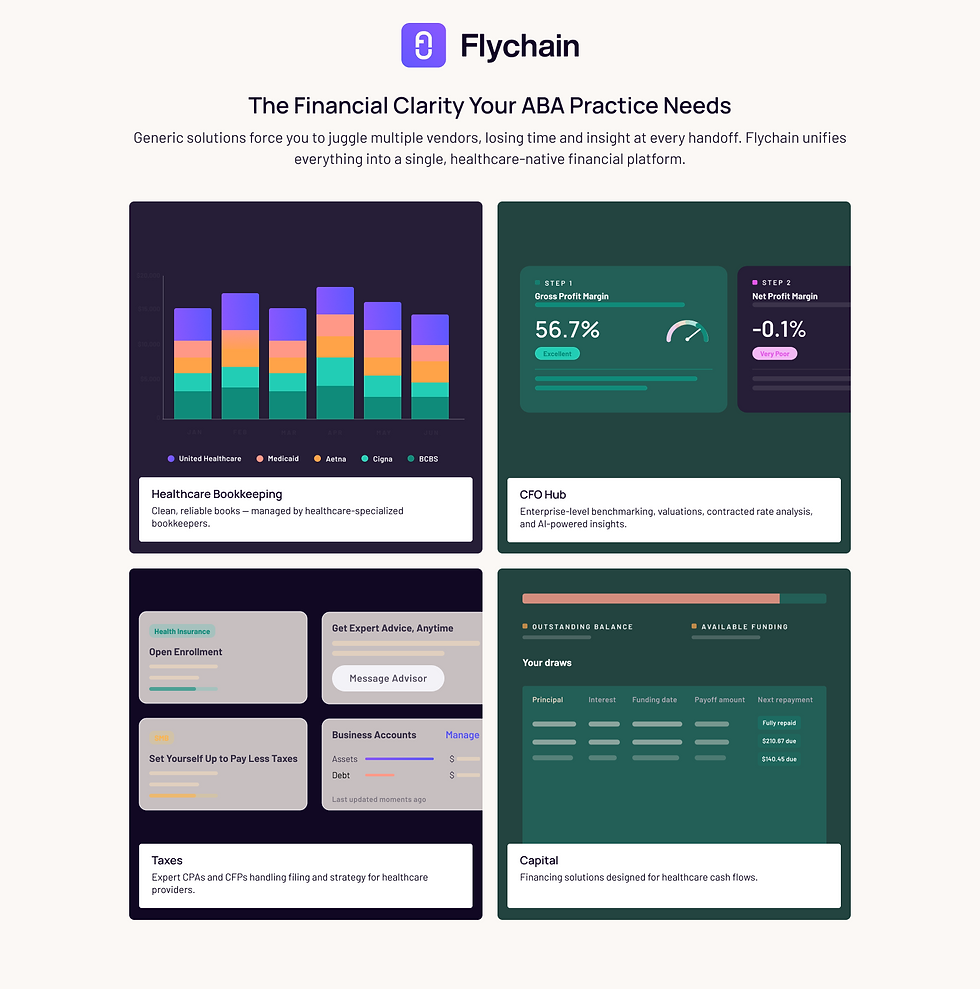
Build a Stronger Practice From the Inside Out
ABA practices need clear financial visibility to make informed operational decisions.
Flychain can help.
Flychain provides ABA-focused bookkeeping, CFO insights, tax planning, and capital solutions to help practice owners understand their numbers and grow with confidence.
Strengthening Supervision Strengthens the Field
Strengthening internal supervision programs strengthens the entire field. Building a strong supervision program requires an investment of time, resources, and infrastructure. But the impact extends far beyond helping individual trainees complete their fieldwork requirements.
When organizations create intentional, well-supported supervision programs, they can provide higher-quality supervision that helps trainees develop the knowledge, skills, clinical judgment, and confidence they need to become well-prepared behavior analysts.
The organization benefits from developing clinicians who are familiar with its systems, values, and standards of care. And trainees benefit from a clearer, more meaningful path toward BCBA certification.
But the impact doesn't stop there. Every well-prepared BCBA entering the workforce strengthens the profession as a whole. As more organizations invest in comprehensive training and development, the field benefits from a workforce that is better equipped to provide high-quality, ethical, evidence-based behavior-analytic services.
Supervision, therefore, is an opportunity to shape the future of the ABA field.
Explore ABA Resource Center's supervision resources to help your organization build a stronger, more intentional fieldwork program. Organizational licensing options are available.
Partnership & Transparency Disclaimer
The content we share on ABA Resource Center is reader-supported. This means that if you click on certain links and make a purchase, we may earn a small referral fee. Rest assured, we only recommend tools, resources, and services that we genuinely believe add value to the ABA field.


The reminder that strong supervision needs a shared approach—not just qualified BCBAs—is spot on for building an in-house pipeline. I’ve been using https://siliconflow.pro/siliconflow-alternative-free
Having structured, in-house pathways for behavior analysts makes such a huge difference for long-term growth. Back when I was balancing clinical practice with staff onboarding, clear supervision frameworks and predictable hours were the only things keeping burnout at bay. It really takes dedicated systems and proper background vetting to build strong, competent teams — checking tools like PeopleLooker during hiring processes often highlighted how vital transparency is across operations. Providing trainees with direct mentorship completely transforms the whole workplace culture!